|
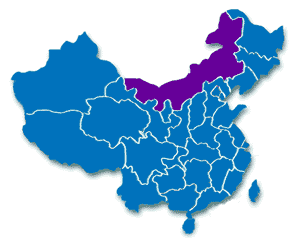
| Inner
Mongolia Autonomous Region of the P.R.C.
|
|
|
Abbreviation
|
NM
|
Population
|
23.76
million
|
|
Area
|
1183000
sq Km
|
Location
|
Northern
China
|
|
GDP
|
RMB
126.82 billion
|
Provincial
Capital
|
Hohhot
|
|
Per
Capita GDP
|
RMB
5350
|
Separate
Planning City
|
None
|
|
|
|
| Climate: |
Inner
Mongolia, with a temperate continental monsoon climate, has a cold, long
winter with frequent blizzards and a warm, short summer. Except for the
relatively humid Greater Hinggan Mountain area, the greater part of Inner
Mongolia is, from west to east, arid, semi-arid and semi-humid.
.
|
| Ethnic
Groups: |
Mongol,
Han, Duar, Ewenki, Hui, Manchu and other ethnic groups.
|
| Agriculture: |
Inner
Mongolia is a major stockbreeding center known for its Sanhe Horses, Sanhe
Oxen and fine wool sheep. Apart from wheat, oat, millet, sorghum, maize,
potato and rice, a wide range of cash crops are grown, including soy beans,
linseed, rapeseed, castor-oil plants and sugar-beets. The Greater Hinggan
range makes up one-sixth of the country's total timber reserves.
|
| Industry: |
The
region has large deposits of iron, chromium, copper, lead, zinc, gold, mica
salt and mirabilite. Founded in many parts of Inner Mongolia is coal, the
reserves of which total 198.2 billion tons -- second largest in China those
of Shanxi Province. Coal is mined in four large open-cut mines and other
collieries. Huge quantities of it are turned into electric current at thermal
power plants and carried by high-voltage transmission lines to North and
Northeast China. |
Return to China Depot |